MALEHA ISRAT CHOWDHURY
I completed my Master's in Computer Engineering, and alongside that I've built strong hands-on experience in machine learning and AI — training models, comparing architectures, and figuring out not just how they work but how to make them work on real, messy data. I also bring 2 years of professional experience in fraud analytics consulting, where I built detection prototypes for banks and financial institutions. The projects I'm proudest of are the two papers I co-authored that got published in Springer Nature.
Where I Come From
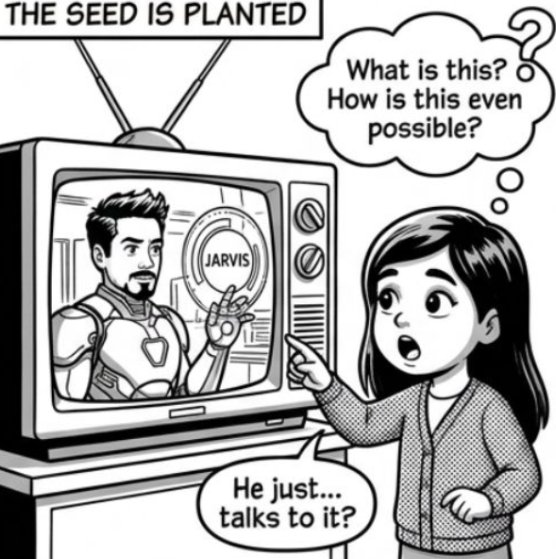


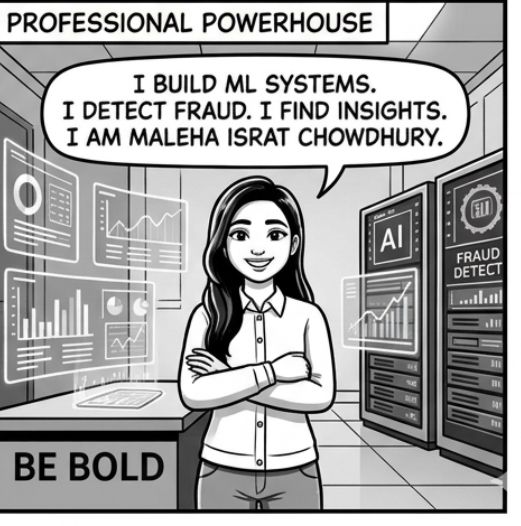
Hi, I’m Maleha. When I was a kid, I watched many movies, but one that truly stayed with me was Iron Man. I remember watching Tony Stark talk to a machine, a system that guided him, advised him, and helped him build things. I had never seen anything like that before, and I couldn’t stop asking myself: “What is this? How is this even possible?” That single question quietly became the beginning of my journey into technology and artificial intelligence.
In school, curiosity turned into action when I started learning programming through Python. As time passed, I explored new tools, concepts, and ways of solving problems. I pursued a BSc in Computer Science & Engineering at East West University in Dhaka, following that curiosity. Later, I moved to Canada to complete my MASc in Computer Engineering at Memorial University of Newfoundland. The more I learned, the more I realized that the answer to “how does this work?” is never just one thing — it’s a process where every step matters. And that’s when things started becoming truly interesting.
My journey has been shaped by a series of achievements each one a chapter that taught me something new, challenged me in different ways, and brought me closer to where I am today.
Over time, I developed a consistent way of thinking about machine learning problems — not starting with models, but starting with understanding.
Today, I’m looking for a team where I can continue building practical, trustworthy AI systems — models that don’t just perform well in experiments, but genuinely matter in the real world.

Experience
Junior Data Scientist
R N Trading Ltd. Dhaka, Bangladesh- Delivered financial crime analytics engagements for capital markets clients, translating trade surveillance and AML risk problems into ML solutions.
- Built trade anomaly detection and transaction monitoring models in Python and scikit-learn to flag spoofing, layering, and wash trading patterns across three client engagements.
- Monitored trading activity data to identify behavioral trends and anomalous order patterns, delivering actionable intelligence to client risk teams.
- Led on-site workshops translating ML-driven monitoring techniques and alert thresholds into actionable guidance for non-technical compliance staff.
- Co-authored surveillance methodology and model validation reports defensible to financial regulators and internal audit teams.
Tech Assistant — Data Migration
East West University · Dhaka, Bangladesh- Consolidated and migrated thousands of beneficiary records from unstructured spreadsheets into a normalized SQL database, designing schema mapping to preserve referential integrity.
- Wrote Python validation scripts to catch formatting errors, duplicates, and missing fields — reducing manual review time and preventing bad data from entering production.
- Diagnosed and resolved integration issues between OCR scanned form inputs and the database, including encoding mismatches and inconsistent field formats.
- Created and maintained documentation of the migration pipeline for future team members to reproduce on new data batches.
Published Research
2 Springer Nature publications · 76,000+ data points classified · 98.82% top accuracy
Enhancing Fake News Detection Through Machine Learning and Transfer Learning Methods
An end-to-end ML project to detect fake news using deep learning, transfer learning, and classical ML benchmarks on 74,428 articles.
Project Journey
From problem to production — the key decisions and insights.
The Problem
94% training accuracy. Tanked on validation. I'd built the wrong thing.
The model hit 94% on training data but tanked on validation — it learned writing style of specific sources, not actual deception signals. I'd built a source detector, not a fake news detector.
Failed Experiments
Three approaches. Three failures. Each one narrowed the problem.
- Log. Reg. on TF-IDF: Learned outlet vocabulary, not deception. Plateaued at 91%.
- SVM with n-grams: Hit 93% but brittle on out-of-distribution articles.
- BERT fine-tuning: Dataset too small — overfitting.
The Pivot
Bi-LSTM with GloVe transfer learning — 98.82%.
Fake news has temporal patterns. Bi-LSTM reads in both directions, capturing claim escalation patterns. Combined with GloVe embeddings, it hit 98.82% and generalized to unseen sources.
What I'd Change
Adversarial inputs. Attention visualization. Deploy as API on day one.
Add adversarial training, attention visualization for explainability, and deploy as API from day one — real articles surface edge cases no test set ever would.
The number — 98.82% — is the least interesting part. The interesting part is what it took to get there: three failed approaches, an audit of what the model was actually learning, and a pivot to an architecture that matched the structure of the problem.
Heuristic demo from this paper's TF-IDF + Bi-LSTM feature logic. Published model: 98.82% accuracy · 74,428 articles · Springer Nature 2024.
Detection of Deceptive Hotel Reviews Through the Application of Machine Learning Techniques
An end-to-end ML project to detect deceptive hotel reviews using NLP, feature engineering and classical ML models.
Project Journey
From problem to production — the key decisions and insights.
The Problem
Fake reviews everywhere — hard to spot at scale. 87% accuracy sounded great until the confusion matrix told a different story.
The model was letting deceptive reviews through while flagging real ones. In fraud, a false negative is a fake review that stays live. Accuracy doesn't capture that asymmetry. Recall does.
Model Comparison
Random Forest, SVM, Decision Tree — the winner wasn't obvious.
- Decision Tree: Overfit badly. High training accuracy, poor generalization.
- SVM: Good precision, but inconsistent recall on deceptive reviews.
- Random Forest: Won on accuracy (87.19%) and recall balance.
Feature Engineering
TF-IDF worked — but choosing what to feed it was the real challenge.
Bigrams captured phrase-level patterns — "highly recommend," "perfect stay" — disproportionately common in deceptive reviews. Small feature engineering decisions moved the needle more than model selection.
What I'd Change
More data. Explainability layer. Real-time API.
Add SHAP or LIME for explainability — "flagged because phrases X and Y appear at unusually high frequency" is more useful than a binary score. That's the difference between a research model and a production tool.
Fraud detection is fundamentally a business problem wearing a technical costume. The model architecture matters less than understanding what kind of error you can't afford to make — and building your entire evaluation strategy around that constraint.
Feature breakdown uses the paper's 4 linguistic dimensions. Published model: 87% accuracy · Random Forest · 1,600 reviews · Springer Nature 2024.
Projects
Real-Time Crypto Sentiment Dashboard
Applies NLP to live Reddit and Twitter data to track market mood shifts in real time — combining sentiment signals with price data to show why the market is moving, not just that it is.
House Price Prediction
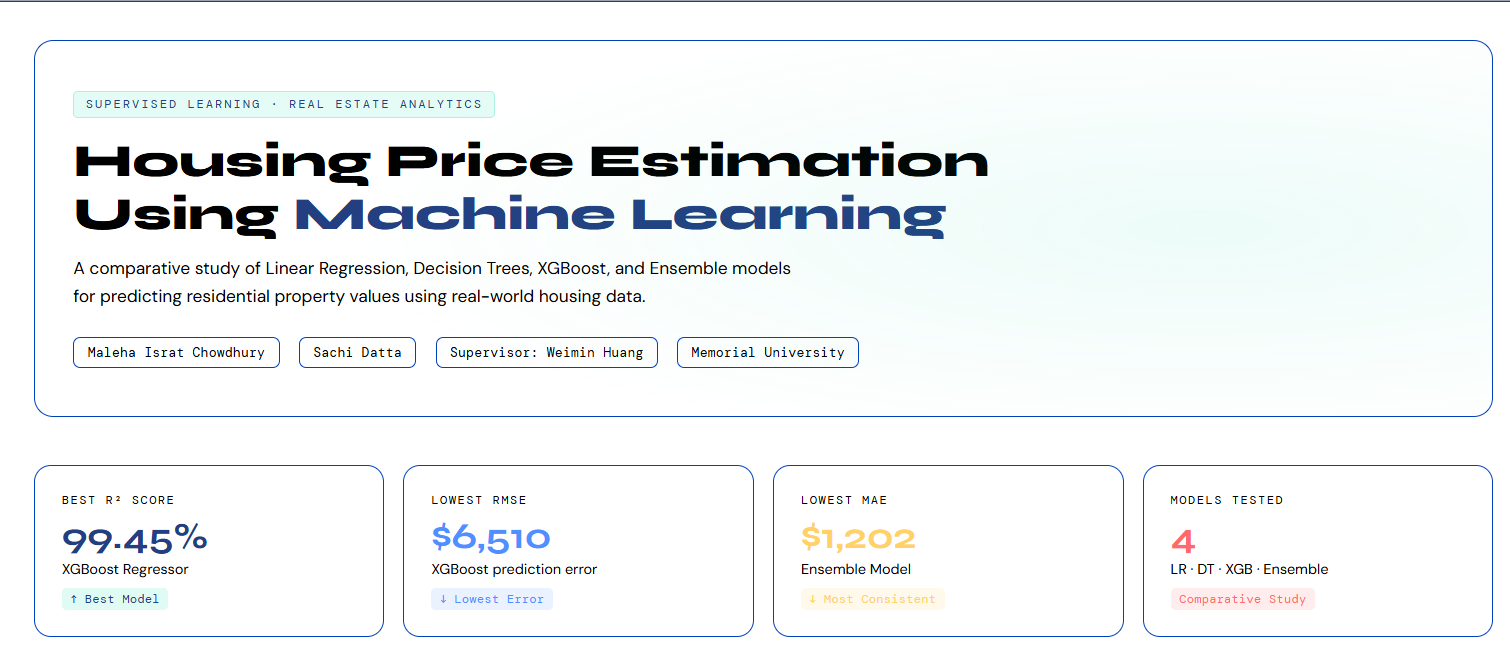
Predicted property prices from 80+ correlated features — found that feature engineering reduced RMSE more than model selection, a key insight for production ML work.
Dengue Incidence Forecasting
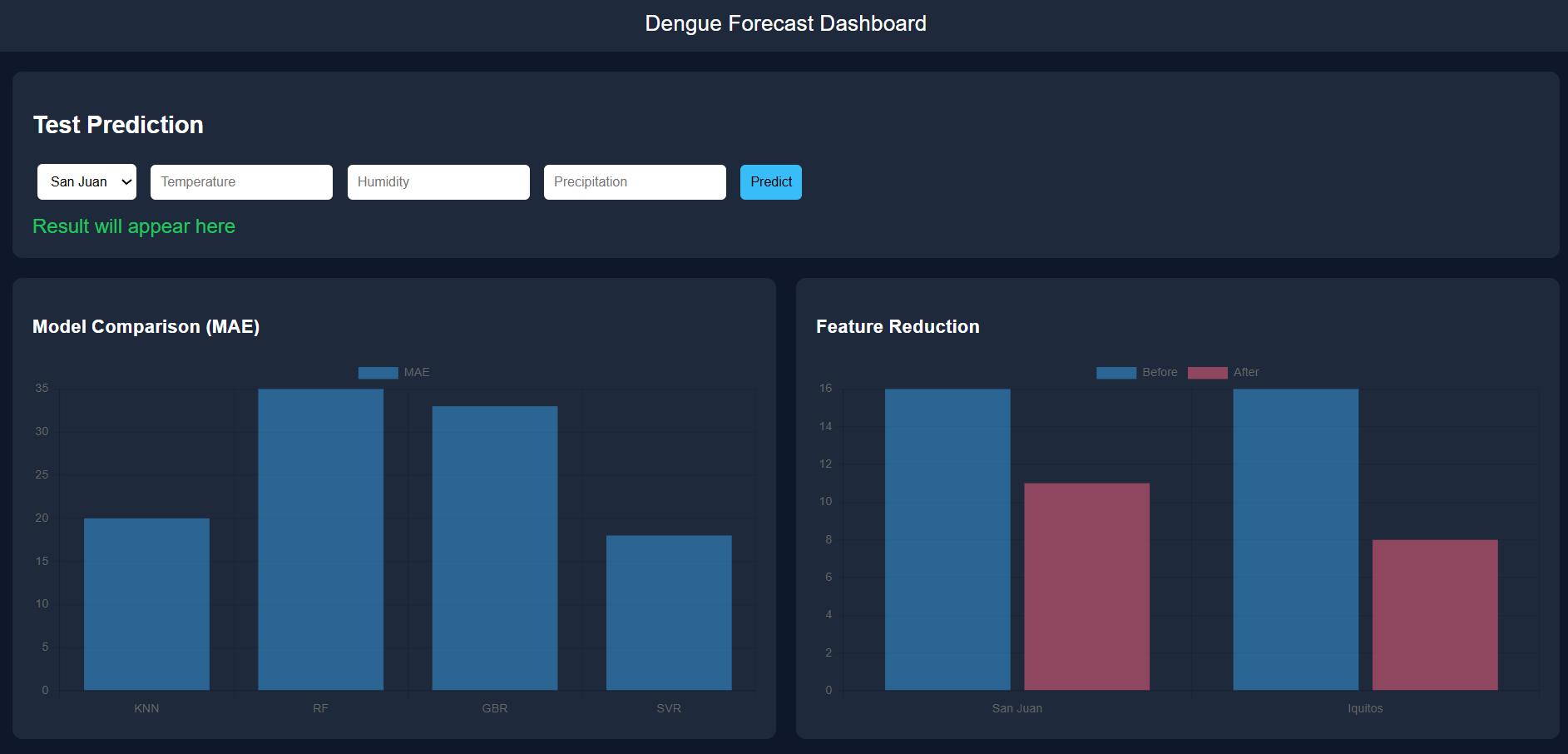
Predicted disease outbreak rates from meteorological data — KNN outperformed Random Forest and GBR after feature selection cut inputs from 16 to 11, dropping MAE from 19.90 to 16.88.

Junction — Job-Finding Platform
Full-stack web app with separate recruiter and applicant flows — built auth, database schema, job listings, and search end to end.
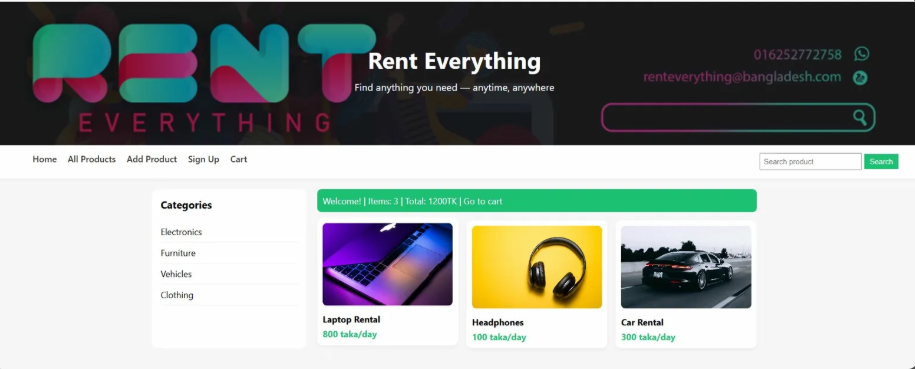
Rent-Anything — Rental Marketplace
Database-driven marketplace where users list and book rentals — built booking conflict detection to prevent overlapping reservations.

Smart Gardening System
Automated plant monitoring system using BJT transistors — sensors trigger irrigation and lighting without manual input.

Full-Fledged Network Design
Designed a multi-subnet organizational network with VLANs and inter-VLAN routing — simulated and verified end-to-end in Cisco Packet Tracer.
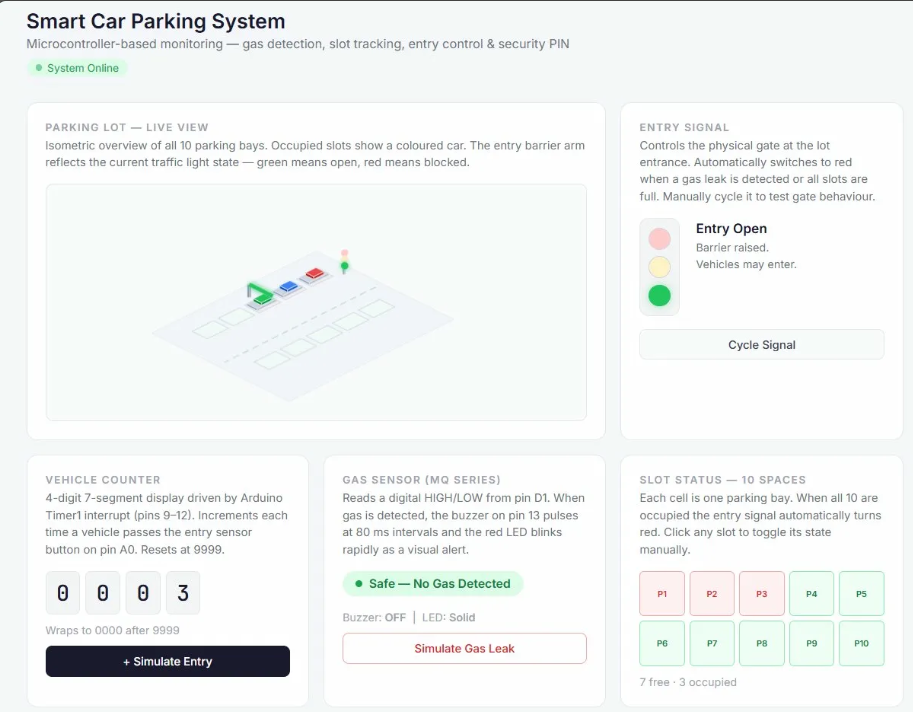
Smart Car Parking System
Microcontroller system that detects slot availability via IR sensors and displays real-time occupancy on an LCD — no manual monitoring needed.
Online Feedback System
Web platform for collecting and managing structured user feedback — with admin review flow and data integrity controls.
Student Advising Management System
University advising system built with OOP principles — models students, advisors, courses, and appointments with clean entity relationships.
Skills
Every tool below backed by a shipped project or published paper.
— hover to activate —
 95%
95% 90%
90% 70%
70% 65%
65% 45%
45% 92%
92% 90%
90% 88%
88% 70%
70% 68%90%
 70%
70% 95%
95% 70%
70% 70%
70%Technical Writing
Not theory — lessons from projects that failed first.
Let's Work Together
Thanks for taking the time to visit. Even if it's just a quick hello, feel free to reach out 🙂
Send a Message
Fill in below — message goes straight to my inbox.